Best 9 Vitamin D Deficiency Hair Loss Fixes That Boost Hair Growth Fast
What Is Vitamin Deficiency Hair Loss?
Vitamin deficiency hair loss happens when the body lacks essential nutrients needed for healthy hair growth and follicle function. Hair follicles are highly active and require a steady supply of vitamins and minerals to produce strong, thick strands. When nutrients like vitamin D, biotin, iron, zinc, or vitamin B12 are low, hair may become weak, brittle, and prone to shedding.
The good news is that nutrient-related hair loss is usually reversible. Once deficiencies are corrected through diet, supplements, and lifestyle changes, hair follicles can recover and regrow healthier strands.
Common Signs of Vitamin Deficiency Hair Loss
Many people don’t realize their hair fall is caused by nutritional gaps. Some common symptoms include:
- Excessive daily hair shedding
- Thinning hair or widening part line
- Slow hair growth
- Weak and brittle strands
- Increased hair breakage
- Dry scalp or dandruff
If these symptoms appear along with fatigue, pale skin, or brittle nails, a vitamin deficiency may be the root cause.
Main Vitamin Deficiencies That Cause Hair Loss
Hair health depends on multiple nutrients working together. The most common deficiencies linked to hair loss include:
- Vitamin D deficiency – disrupts follicle growth cycle
- Biotin deficiency – weakens hair structure
- Iron deficiency – reduces oxygen delivery to follicles
- Zinc deficiency – affects scalp repair and oil balance
- Vitamin B12 deficiency – impacts hair cell production
- Vitamin A imbalance – both excess and deficiency can trigger shedding
Identifying the exact deficiency is key to effective treatment.
9 Best Vitamin Deficiency Hair Loss Treatments That Work
1. Vitamin D Supplementation for Follicle Activation
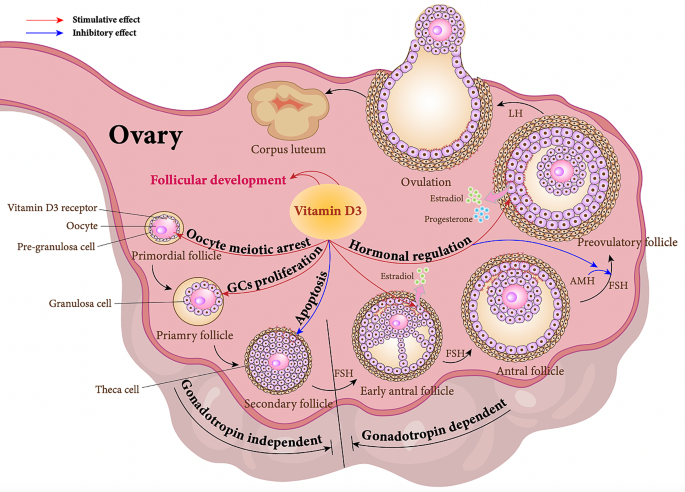
Vitamin D plays a vital role in stimulating hair follicles and supporting the anagen (growth) phase. Low levels can push follicles into the resting stage, causing shedding. Safe sun exposure and vitamin D3 supplements can help restore levels and improve hair density.
2. Biotin for Stronger Hair Structure
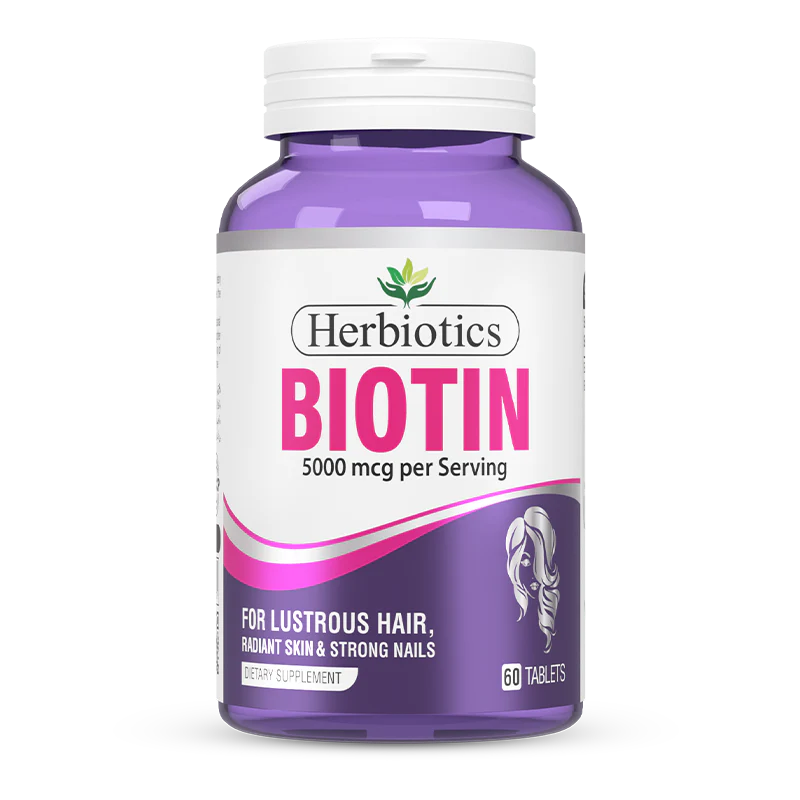
Biotin (vitamin B7) is essential for keratin production, the protein that forms hair strands. A biotin deficiency can lead to brittle hair and breakage. Supplementing biotin or eating eggs, nuts, and seeds can strengthen hair over time.
3. Iron Intake to Prevent Hair Shedding
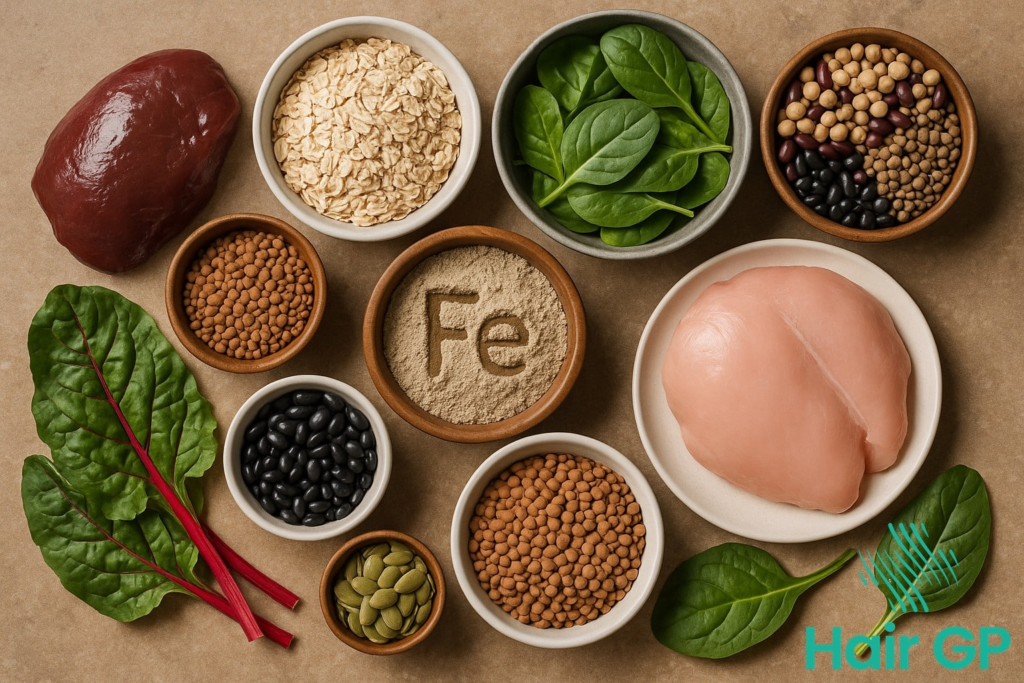
Iron deficiency is one of the most common causes of hair loss, especially in women. Iron helps red blood cells carry oxygen to hair follicles. When iron is low, follicles weaken and hair enters the shedding phase. Iron-rich foods like spinach, lentils, and red meat can help restore levels.
4. Zinc for Scalp Health and Repair
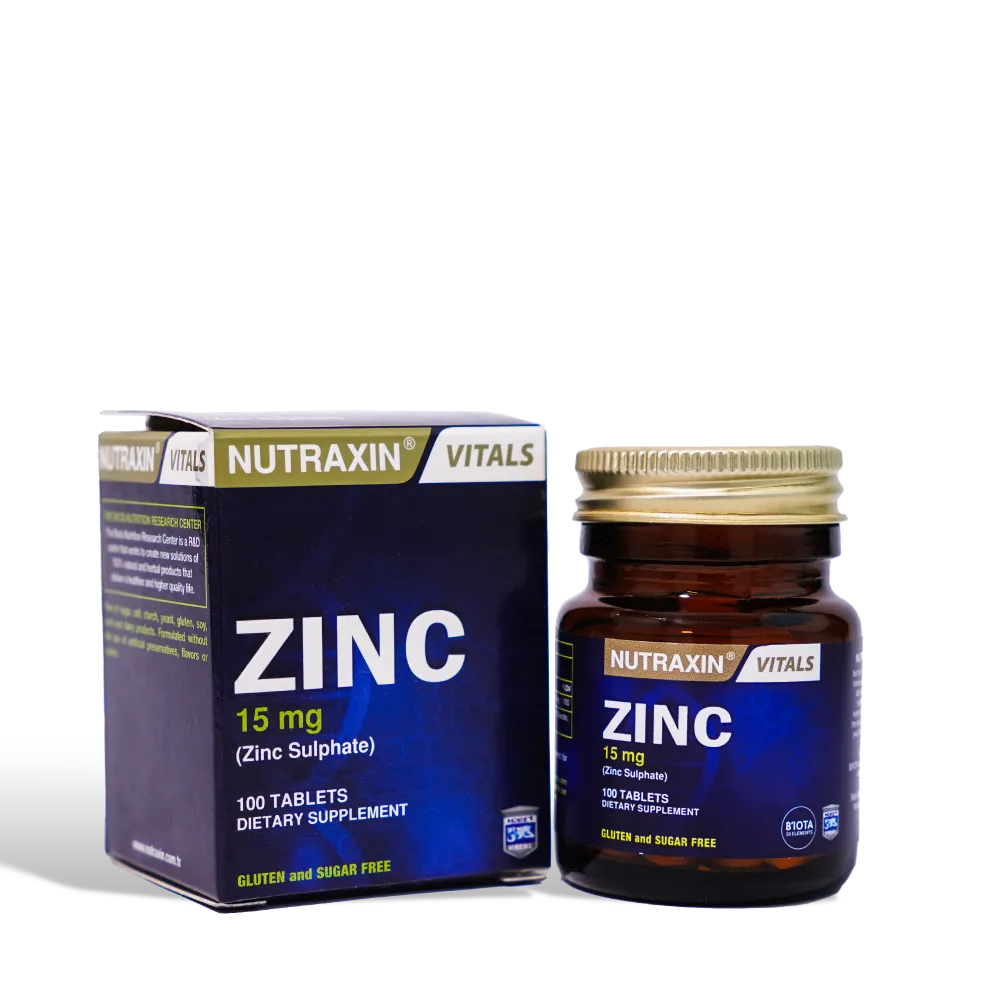
Zinc supports tissue repair and regulates oil glands around hair follicles. A deficiency can lead to scalp inflammation, dandruff, and hair shedding. Zinc supplementation or foods like pumpkin seeds and chickpeas can improve scalp health.
5. Vitamin B12 for Hair Cell Production
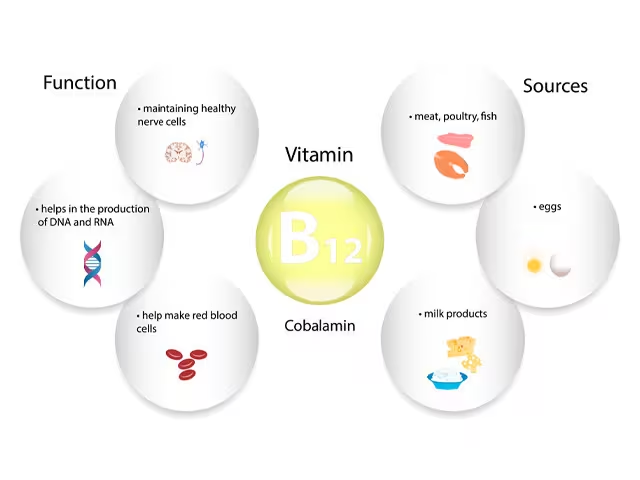
Vitamin B12 is essential for red blood cell formation and oxygen delivery to follicles. Low B12 levels may result in hair thinning and slow regrowth. Including dairy, eggs, fish, or B12 supplements can help restore hair vitality.
6. Protein & Amino Acids for Hair Strength
Hair is primarily made of keratin, a protein. Inadequate protein intake weakens hair structure and increases breakage. Consuming lean protein sources like chicken, legumes, tofu, and yogurt supports stronger hair growth.
7. Omega-3 Fatty Acids for Hair Thickness
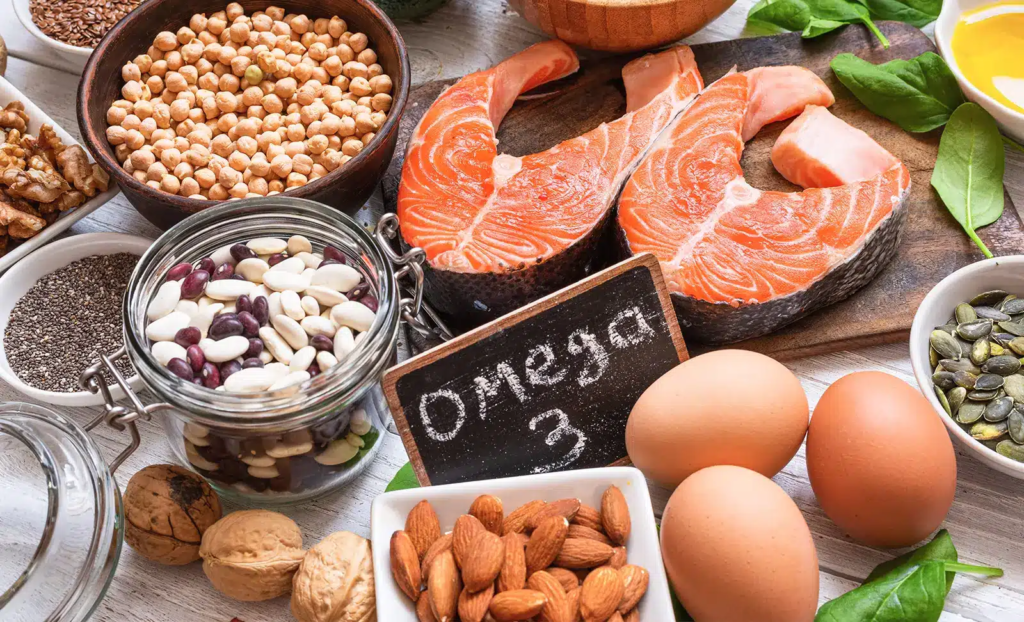
Omega-3 fatty acids reduce inflammation and nourish hair follicles, improving hair texture and thickness. They also support scalp hydration. Fatty fish, walnuts, and flax seeds are excellent sources.
8. Multivitamin Therapy for Balanced Nutrition
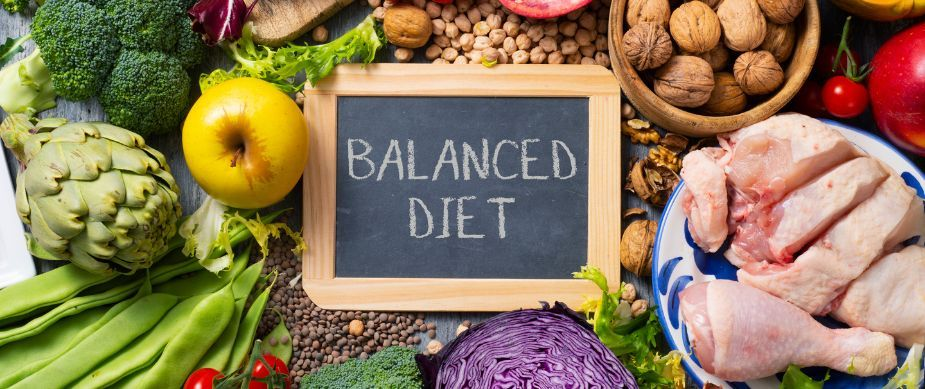
Sometimes hair loss results from multiple deficiencies rather than a single nutrient gap. A high-quality multivitamin can help restore overall nutritional balance and support healthy hair growth.
9. Blood Testing & Personalized Treatment
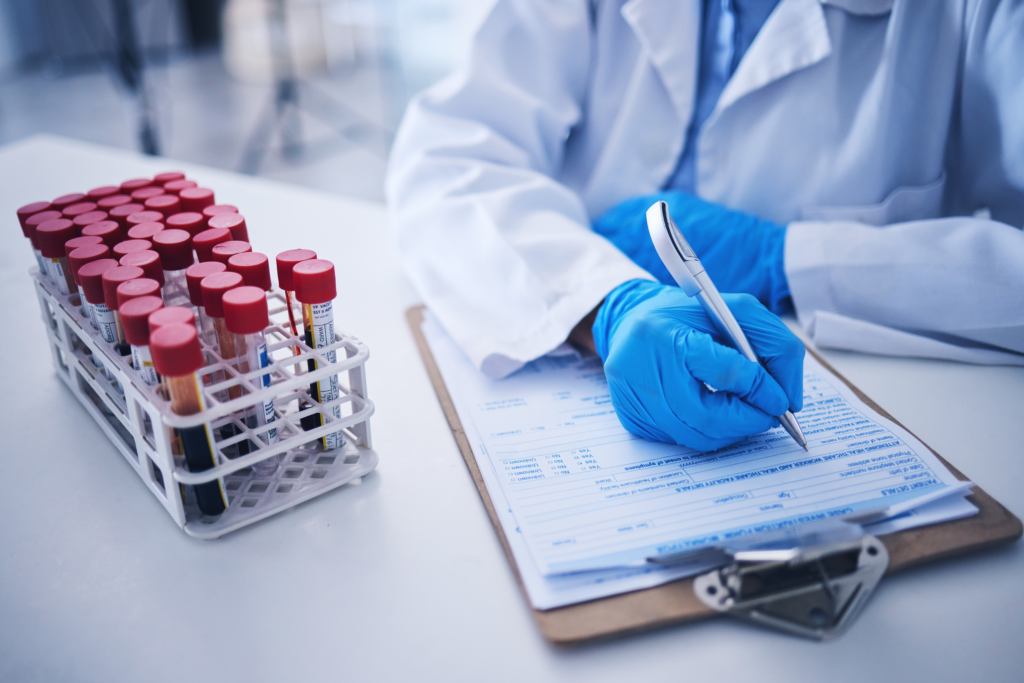
A blood test is the most reliable way to identify vitamin deficiencies causing hair loss. Once deficiencies are diagnosed, targeted supplementation and dietary changes can lead to faster and more effective hair recovery.
Best Foods to Prevent Vitamin Deficiency Hair Loss
A nutrient-rich diet is the foundation of strong hair. Include:
- Eggs and dairy products
- Leafy green vegetables
- Nuts and seeds
- Whole grains
- Fatty fish
- Legumes and lean protein
These foods supply essential vitamins and minerals needed for hair growth.
How Long Does Hair Regrowth Take After Correcting Deficiency?
Hair regrowth after addressing vitamin deficiency typically begins within 2–3 months, but visible improvements in thickness may take 4–6 months. Hair growth is a slow process, so consistency with nutrition and supplementation is crucial.
Tips to Prevent Vitamin Deficiency Hair Loss
- Maintain a balanced diet rich in vitamins and minerals
- Avoid crash dieting or extreme calorie restriction
- Get regular blood tests if hair loss persists
- Manage stress levels to improve nutrient absorption
- Use gentle hair care routines to prevent breakage
Final Thoughts on Vitamin Deficiency Hair Loss
Vitamin deficiency hair loss is common but highly treatable. By identifying nutrient gaps and correcting them through diet, supplements, and healthy lifestyle habits, hair follicles can recover and produce stronger, thicker strands. Early intervention not only restores hair growth but also improves overall health and wellbeing.
